Cut B: Agent Team → Desk Tasks → PR Links → Human Approve
Most multi-agent demos stop at chat. Cut B keeps going: spin Claude, Cursor, and Grok as a team, give each a desk task, link the PR both ways, and keep merge (and send) behind a human gate.
Spinning three agents in one window is easy. Keeping them from shipping the wrong PR — or sending the wrong outbound — is the product.
Cockpit Cut B is the multi-agent path we run for small US consulting shops: stand up Claude / Cursor / Grok as one team, assign each a desk task, link the pull request both ways to the work, then hold approve-before-merge and approve-before-send. Agents finish inside the lease. Humans still decide what lands.
Watch the captioned walkthrough first — four beats, one control plane:
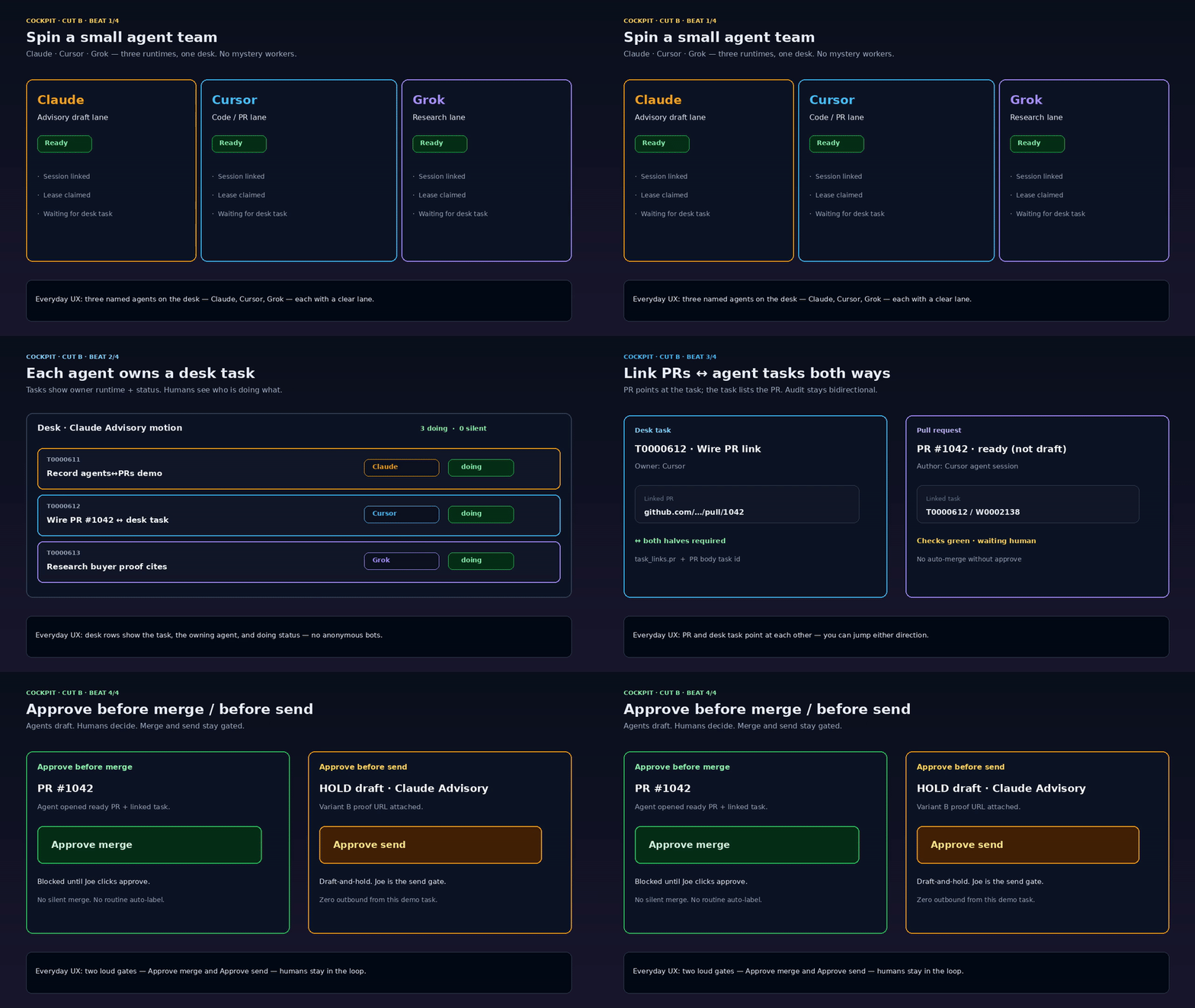
Beat 1 — Spin the agent team (Claude / Cursor / Grok)
Cut B does not treat “agents” as three disconnected chat tabs. You stand up the runtimes as one team on Cockpit — Claude, Cursor, and Grok bound to the same board.
That is the first claim: the OS is the binding surface. The models are workers. You are not juggling three vendor consoles and a shared Google Doc to remember who owns what.
Beat 2 — Each agent owns a desk task
Work is not a Slack ping. Each agent gets a desk task — claimable, lease-bounded, with a clear done condition.
When a runtime picks up, it clocks in, stamps the live session, and works that unit. Parallel agents stay visible on the same board instead of disappearing into private threads. If something stalls, you see the stuck reason on the task — not a silent hang in someone else’s laptop.
Beat 3 — PR ↔ task linked both ways
The ship artifact is a pull request. Cut B links the PR to the task and the task to the PR.
That two-way link is what makes the board honest: open the task and you land on the diff; open the PR and you land on who approved start, which agent ran, and what still needs a human. No “where did this change come from?” archaeology after merge.
Evidence for this loop is the Cut B package we already shipped internally (T0000611 / cb-wiki-2 PR #1074) — the walkthrough GIF above is the same story, captioned for an ops buyer.
Beat 4 — Human approve-before-merge / approve-before-send
Agents can open the PR. Agents can draft the outbound. Merge and send stay human.
That is the same spine as Approve-Before-Start Is the Product: desks propose, humans start and close the gates that matter, agents finish inside the lease. Cut B makes the late gates visible — approve-before-merge on the PR path, approve-before-send on draft-and-hold outbound (SDR does not auto-send).
No human tap, no merge. No human tap, no send. The team does not invent a release.
Why this is the product (not “more agents”)
Chat tools automate a session. CRMs store records. Project tools store tasks. None of them close team of agents → owned desk work → linked PR → human merge/send without a re-key tax across four apps.
Cockpit collapses that stack — the same OS framing as Approve to Start: Cockpit Is the OS You Already Run. Cut A is the everyday call→match→approve→POC path. Cut B is the multi-agent ship path. Cut C is out of scope here.
What you can sell from this walkthrough today:
- Bound Claude / Cursor / Grok runtimes on one board
- Desk tasks with claim, lease, and human close
- Bidirectional PR ↔ task links
- Approve-before-merge and draft-and-hold approve-before-send
What we are not claiming in this post: Cockpit already public as OSS, SDR auto-send, live authenticated UI capture of every screen (this Cut B package is the captioned product storyboard), or Cut C.
Try the path
See the product page at cloudbeast.io/cockpit. If you want this agent-team loop on your own desks — assign, link, approve, ship — book a discovery call.
Ready to see where AI fits in your business?
Book a call — we'll map your workflows, quick wins, and a realistic path forward.